Does 3D Product Animation Help Adult Wellness Brands Advertise Products on Social Media?
A conversation with 3D Motion Designer Anastasia on navigating social media ad restrictions, Gestalt psychology, attracting attention, and when 3D is the right choice.
Adult wellness brands face a specific challenge when it comes to promoting their products. Some social media platforms restrict adult product advertising, while others allow certain types of non-explicit content under specific conditions.
At the same time, traditional product photography and video don't always make it easy to explain what makes a product different.
So, can 3D product animation help adult wellness brands communicate more effectively on social media?
Here you can read a conversation with Anastasia, a freelance 3D Motion Designer working with product brands, about where 3D creates opportunities, how brands can use it, and why it shouldn't be treated as a universal marketing solution.
Conversation Topics
What's the biggest opportunity for 3D animation in adult wellness advertising?
I would say there are three main opportunities: working with advertising restrictions, attracting attention, and explaining product features.
Let's start with advertising restrictions. 3D animation can help, but I wouldn't say it allows brands to advertise everywhere. Some social media platforms don't allow the promotion of adult wellness products at all. Others allow certain types of non-explicit content.
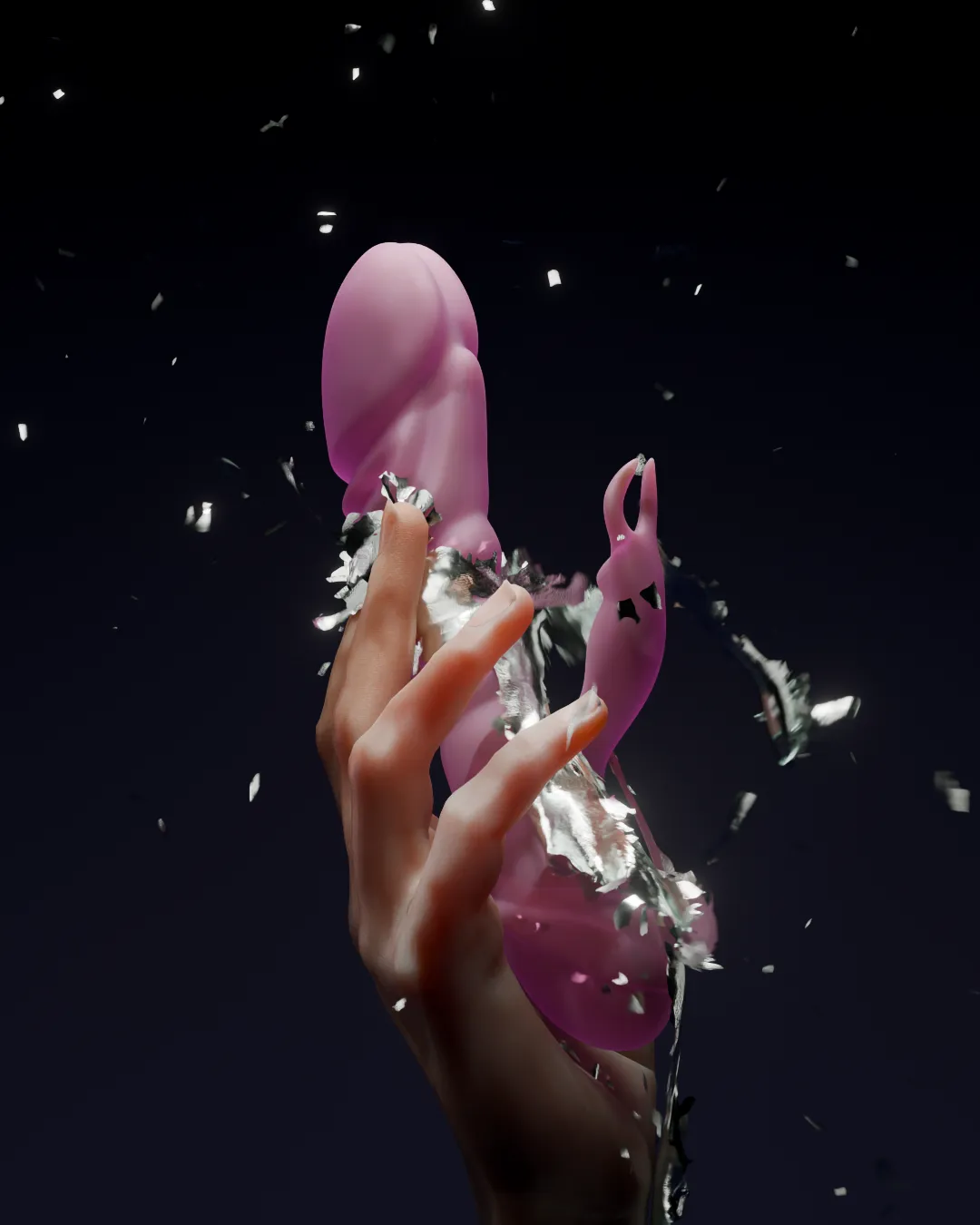
You can show how a product works and how it interacts with the human body without using explicit imagery, nudity, or real bodies. You can use basic shapes and visual elements to communicate the idea.
There's also an interesting psychological aspect to this. In general, when we see an incomplete image or something that doesn't reveal all the information, our brain naturally tries to fill in the missing pieces and make sense of what we're looking at.
This is actually a well-known principle in psychology called Gestalt closure. Basically, when we see an image that's missing some parts, our brain naturally tries to complete it and understand the full picture. There's research on this principle that explains how our visual perception works.
I think this is particularly interesting for adult wellness brands. A non-explicit 3D advertisement doesn't necessarily have to show everything. Abstract shapes, simplified body forms and visual suggestions can communicate how a product works without an explicit representation. You're giving the audience enough visual information to understand the message while allowing their imagination to complete the picture.
The second opportunity is attracting attention.
I've noticed this through my own LinkedIn posts. Some of the most popular posts I've published, in terms of impressions, were advertisements I created for adult wellness brands.
People are interested in seeing something different. Most brands still use product photography or footage showing someone holding the product. It's relatively rare to see 3D motion design used to advertise sex toys.
So when people come across this type of content, it can immediately stand out because they haven't seen something similar before.
And finally, 3D is particularly useful for explaining product features that are difficult to show through traditional content.
You can literally dive inside a product, reveal its internal components, or demonstrate how a particular feature works without showing anything explicit.
For example, if a brand targets customers looking for a quiet toy, 3D can help explain what makes its motor quieter. If waterproof construction is one of the main selling points, you can create visuals that demonstrate how the product is designed to protect its internal components.
The important thing is to understand the brand's goal first. Once you know what the brand wants to communicate and who it wants to reach, you can find the right way to use 3D motion design.
Should adult wellness brands use 3D animation for paid advertising, organic social media, or both?
I don't think there's one answer that works for every adult wellness brand.
Before recommending 3D animation, I would need to understand the specific goals of the brand, the problems it's facing, and what it wants to achieve.
For example, if a brand wants to promote a waterproof product or highlight a specific silicone texture, but these features are difficult to demonstrate through real footage or photography, 3D animation is a good solution for paid advertising.
It gives the brand an opportunity to communicate a specific product benefit to the audience it's trying to reach.
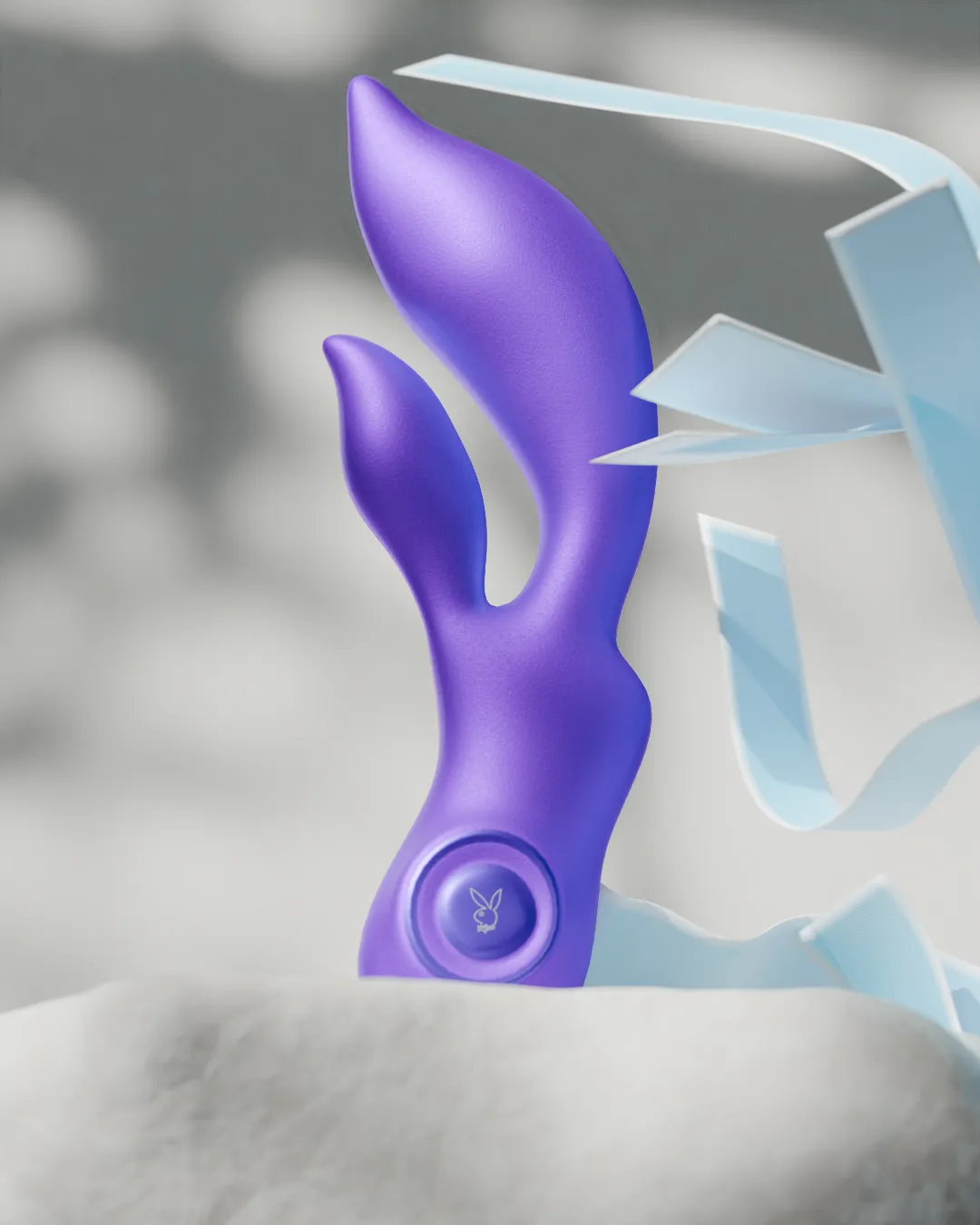
When it comes to organic social media, I think it's a natural additional use for 3D content.
You might originally create an animation for a website, an Amazon listing, or a paid campaign, but you can also publish it on your social media channels. The same production can support different marketing activities.
However, I want to make one thing clear: I'm a 3D Motion Designer, not a marketing manager.
The marketing team investigates what the brand needs to communicate to its audience. My role is to find a visual solution and show that message through 3D.
For example, a marketing manager might identify a particular product feature they want to highlight. I can then explore how to communicate that feature visually.
That's why I wouldn't recommend 3D animation simply because a brand wants to start using it. First, we need to understand what the brand actually needs.
Once a brand has a 3D product model, how much can it actually do with it?
One of the biggest advantages of 3D production is flexibility.
Let's imagine a brand has one product available in 50 different colours.
If the brand needs 50 product images for its Amazon listing, creating all those variations through traditional photography would require a lot of additional work.
With 3D, once the product is modelled, you can adjust the materials and colours to create different versions much more efficiently.
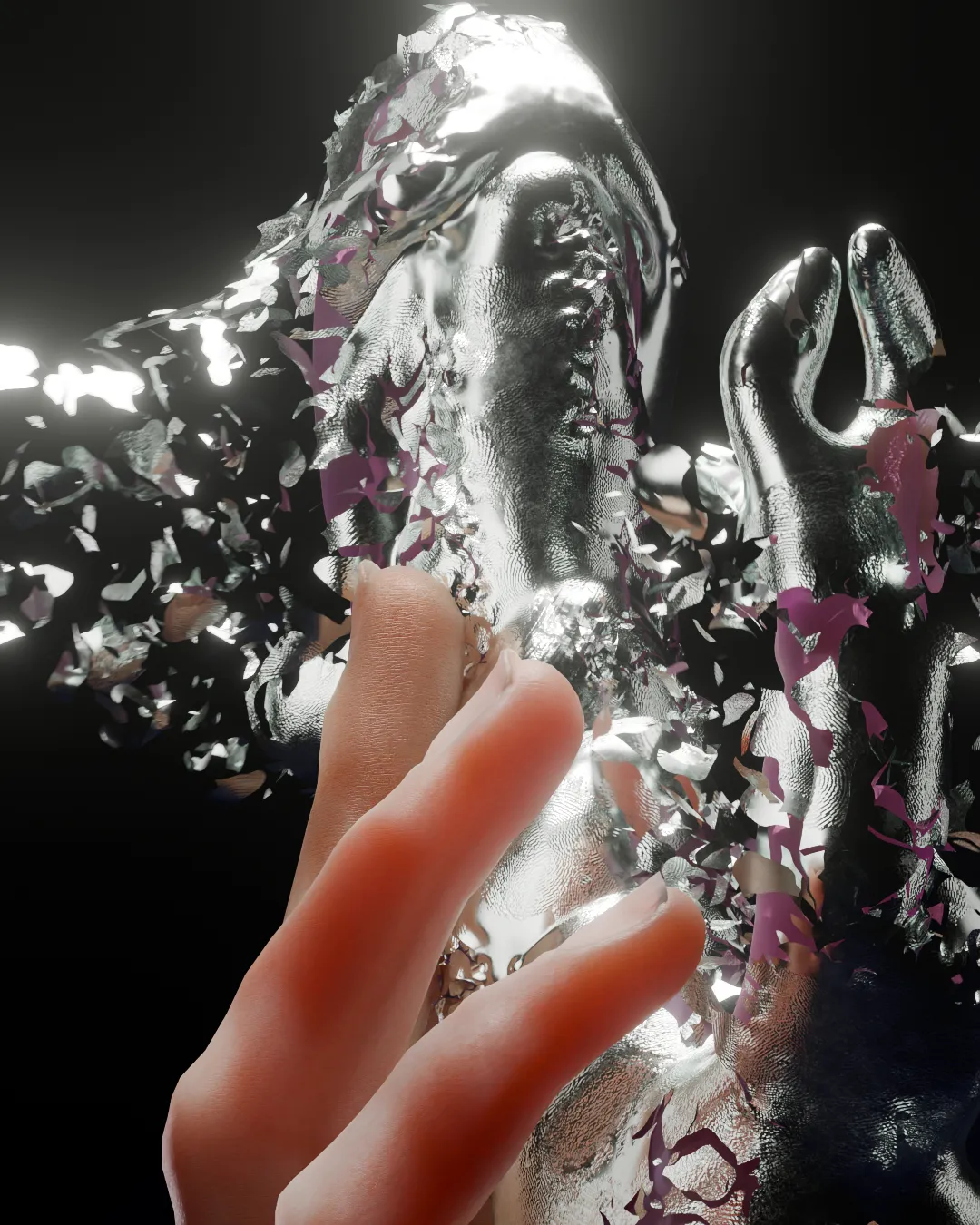
The same applies to animation.
You can take one animation and extract shorter cuts for social media, create additional visuals for a website, or use selected frames as product stills.
So you're not necessarily creating one animation for one specific placement. You're building visual assets that can be adapted for different purposes.
But I wouldn't say that 3D should replace photography or videography.
These are different tools that solve different problems.
Customers still want to see the actual product. They want to understand its real size, how it looks in someone's hands, and what it looks like in everyday use.
Photography and real footage are important for that.
3D becomes particularly useful when you need to highlight features that are difficult to show through traditional content, explain internal technology, or create visuals without relying on explicit imagery.
I see these approaches as complementary rather than competing with each other.
If an adult wellness brand wants to start using 3D animation but doesn't know where to begin, what would you ask them first?
First, I would want to understand whether the brand already has a marketing strategist and a brand designer.
I need to know that the brand has an established marketing strategy and visual identity that I can follow. I want to make sure we're working towards the same goals and that the animations will fit the brand's existing communication.
Then I would ask a few practical questions:
What problems is the brand currently facing?
What marketing channels and types of content are working best at the moment?
Has the brand worked with 3D animation before?
What does it want to achieve by working with me?
Where will the animation be used?
Who is the target audience?
How does the brand want to present its product?
I need to understand what the brand expects from the project before recommending a particular approach.
And honestly, there are situations where I wouldn't recommend starting with 3D.
If a brand doesn't have a clear marketing strategy and simply wants to try 3D because it looks interesting, I can't promise that the animation will solve its marketing problems.
For example, if the actual problem is that customers don't remember the brand, people confuse it with competitors, or the Amazon listing isn't getting enough clicks, those aren't necessarily problems that 3D animation can solve.
I can investigate the challenges the brand is facing and suggest ways 3D could help communicate its products. But I'm not a marketing strategist, and I don't want to promise results that are outside my area of expertise.
For me, the most important thing is understanding the goal before starting production.
Final thoughts
3D product animation can create new opportunities for adult wellness brands, especially when traditional photography or video cannot communicate a product's features clearly.
It can help brands present products in a non-explicit way, explain internal technology, attract attention with less familiar visual formats, and create adaptable assets for different marketing channels.
But 3D motion design isn't a marketing strategy on its own. It works best when there's a clear message, a defined audience, and a specific reason to use it. A 3D designer can help turn those goals into specific visual ideas, from showing how a product works to highlighting features that are difficult to demonstrate through photography or video.
The question isn't just whether your adult wellness brand needs 3D animation. It's how 3D can help communicate your product's value, explain its features, and make your message clearer to your audience.
See Function-First 3D in Action: Sexual Wellness 3D Motion
Explore how we visualized sensory curves, internal mechanisms, and luxury silicone textures while maintaining 100% ad compliance across Meta, TikTok, and web channels.
Frequently Asked Questions
How does 3D animation help adult wellness brands bypass advertising restrictions?
3D animation allows brands to communicate product functionality and anatomy interaction using abstract shapes, simplified forms, and Gestalt closure principles rather than explicit imagery, real bodies, or nudity. This keeps creative compliant with digital advertising policies while still communicating value.
Can 3D product animation replace traditional photography completely?
No. 3D and photography serve complementary roles. Traditional photography shows real-world scale, lifestyle context, and how products look in hand. 3D animation excels at explaining internal mechanics, waterproof engineering, motor isolation, and generating multi-color variations efficiently.
What makes 3D animation versatile across paid and organic social channels?
Once a 3D asset is built, it can be re-rendered into multiple aspect ratios (9:16 for Reels and TikTok, 16:9 for website headers, 1:1 for paid feeds), short cutdowns, high-resolution still renders, and dozens of colorway updates without booking additional studio shoots.
When should an adult wellness brand NOT start with 3D animation?
If a brand lacks an established marketing strategy, visual identity, or brand positioning, 3D animation alone will not solve core marketing challenges. 3D works best when deployed to execute a defined marketing objective and highlight verified product differentiators.
Start Your Project
Ready to apply these storytelling techniques to your brand? Let's discuss how we can create stunning 3D visuals together.
Book a Discovery Call