How to Choose the Right 3D Visual Approach to Showcase Sports Product Features
Discover how sports equipment brands use 3D motion design, animation, 3D visuals and visual storytelling to showcase product technology and stand out in a competitive market.
The sports industry is enormous. And there are many ways to become part of it.
From swimming and tennis to paddle, cycling, running and fitness, the sports industry covers a huge variety of products, services and businesses. You can be a sports equipment manufacturer, a sportswear brand, a professional athlete, a sports club, a tournament organizer, a fitness technology company or even a brand providing recovery and nutrition products.
But if we look at sports from a business perspective, one question becomes particularly interesting: How do sports brands market their products and stand out from competitors?
The answer depends on what they are trying to achieve. Some brands focus on event sponsorships and partnerships to get their products in front of athletes and fans. Others invest in athlete collaborations, social media campaigns, product launches and video advertising.
For example, Speedo became the official technical and apparel partner of Aquatics GB and the Home Nations swimming organizations, providing swimwear and specialist equipment to professional athletes. This partnership puts its products directly into the professional swimming environment, where athletes wear and demonstrate them at major competitions.
In padel, Bullpadel partnered with Premier Padel to become its official technical apparel and racket provider through the end of 2026. The partnership agreement also includes exclusive collections for professional players and fans.
These are different marketing approaches, but they share the same goal: connecting a product with the people who are most likely to buy it. A swimming brand launching a new competition swimsuit collection, for example, might use professional athletes and competition partnerships to demonstrate how its products look and perform in a real sporting environment. A padel equipment brand might partner with a professional tournament, introduce an exclusive racket collection or organize product demonstrations to reach players directly.
Each approach addresses a particular business objective: brand awareness, product exposure, audience engagement, credibility or sales.
Table of Contents
When traditional marketing isn't enough: explaining the technology behind sports equipment
Let's say a brand launches a new padel racket. It has developed a new carbon fibre construction, an improved core or a technology designed to improve aerodynamics and reduce vibrations. A traditional product photograph can show the racket's shape, materials and finish. An athlete can demonstrate how it performs on the court. But neither necessarily explains what makes the technology different.
This is where 3D product visualization becomes particularly useful. Instead of simply showing the finished product, a brand can use 3D rendering and animation to take the audience inside it, reveal its construction, demonstrate how its components work together and turn technical specifications into something people can actually see.
Bullpadel is a good example. In its product campaigns, the brand uses 3D Motion Design to present its rackets through dynamic environments, material interactions and detailed product sequences, such as in its Vertex 03 campaign and Hack racket launch.
The idea is to make the product's performance and character visible through a visual concept that would be difficult to reproduce in a conventional product shoot.
This is one of the biggest advantages of 3D: the product doesn't have to be limited by the physical environment, camera angles or laws of real-world production.
But 3D itself is a huge industry, with many different techniques and creative directions. So how do you choose the right one?
How to choose the right 3D approach for sports equipment marketing
Before choosing a 3D technique, it is worth taking a step back. The first question shouldn't be: what kind of 3D animation would look impressive? It should be: what business problem are we trying to solve, and what does our audience need to understand?
For example, a brand launching a new product might need high-quality visuals to present its design and features. A company introducing new internal technology might need an exploded-view animation to explain how the product is constructed. Another brand might want to create an attention-grabbing campaign for social media or a large-scale visual experience at a sporting event.
The same product can be presented through completely different 3D techniques depending on the objective:
| Business challenge | What the audience needs to see | Suitable 3D approach |
|---|---|---|
| New product launch | Product design and key features | 3D product animation |
| Explain internal technology | Construction and components | Exploded-view 3D animation |
| Build a premium image | Materials, details and design | 3D static visuals |
| Stand out on social media | Unexpected, attention-grabbing visuals | CGI / VFX / 3D Motion |
| Communicate brand identity | Product connected to a bigger idea | 3D brand storytelling |
| Attract attention at an event | Large-scale visual impact | 3D anamorphic LED content |
| Help customers choose a product | Different configurations and features | Web-Interactive 3D visualization |
Let's look at what these approaches actually offer and how sports brands use them.
1. 3D static visuals: when product details need to do the talking
Business problem: The brand needs high-quality product imagery for its website, online store, product catalogue or advertising campaign.
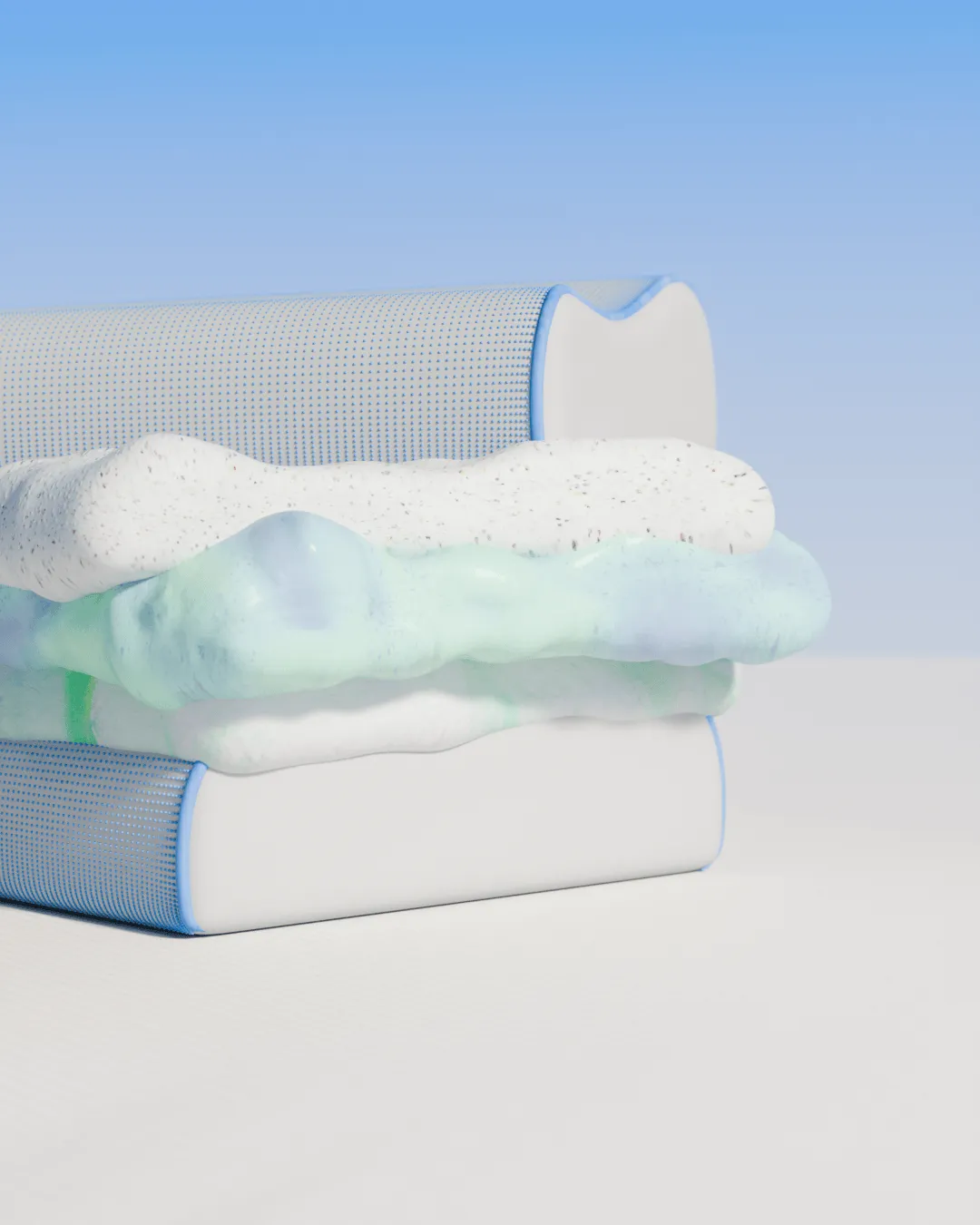
Sometimes a product doesn't need to move to make an impression. 3D static rendering allows brands to create photorealistic product images with complete control over lighting, materials, composition and camera angles.
It is particularly useful when a brand needs consistent product images across multiple models and colour variations, when the physical product isn't available yet, or when small material details and surface finishes need to be highlighted.
2. 3D product animation: when the product needs to demonstrate how it works
Business problem: The product has specific features or technologies that are difficult to communicate through static images.
3D product animation gives the audience a closer look at the product through movement. A tennis racket can rotate, disassemble and reveal its construction. A swimming goggle can be presented through macro shots showing its lens, seal and frame. A golf shoe can demonstrate the structure of its sole.
This approach works particularly well for product launches, technical feature demonstrations, website product videos, social media advertising and sales presentations.
Real example: YONEX
A standout example is YONEX's badminton racket 3D feature animation. Each animation focused on a different product feature, helping the audience understand the design and technology behind the racket.
Why this approach works: instead of asking customers to understand technical specifications, the brand makes those features visible and easier to understand.
3. Exploded views and technical 3D animation: when the technology is inside the product
Business problem: The product's competitive advantage comes from its internal construction, materials or engineering.
This is where exploded-view animation, X-ray effects and technical 3D visualization become especially useful. Rather than presenting the product as one finished object, 3D allows its components to separate, move and reveal the construction underneath.
For sports equipment, this could mean revealing the layers of a running shoe sole, showing the internal core of a padel racket, explaining carbon fibre construction, visualizing cushioning and shock absorption, or demonstrating how different materials work together.
Real example: ASICS Lightweight, bouncy cushioning
In its product campaign, ASICS showcased its lightweight bouncy cushioning technology. The animation showed shoe cushioning, bouncy shock-absorption mechanics, and the layered technology inside the shoe.
Why this approach works: it makes invisible product engineering visible. This is particularly valuable when the technology itself is a major reason for choosing one product over another.
4. 3D brand storytelling: when the brand needs more than a product demonstration
Business problem: The brand wants to create an emotional connection with its audience, establish a distinctive identity or make a new product launch memorable.
Not every 3D campaign needs to explain the product component by component. Sometimes the goal is to communicate a feeling: speed, strength, precision, control or endurance.
The product becomes part of a visual narrative. Instead of simply rotating a racket in front of a camera, the brand creates a world around it. (You can explore more on this in our guide on how 3D motion design strengthens brand storytelling).

Real example: TEXTYLE Group
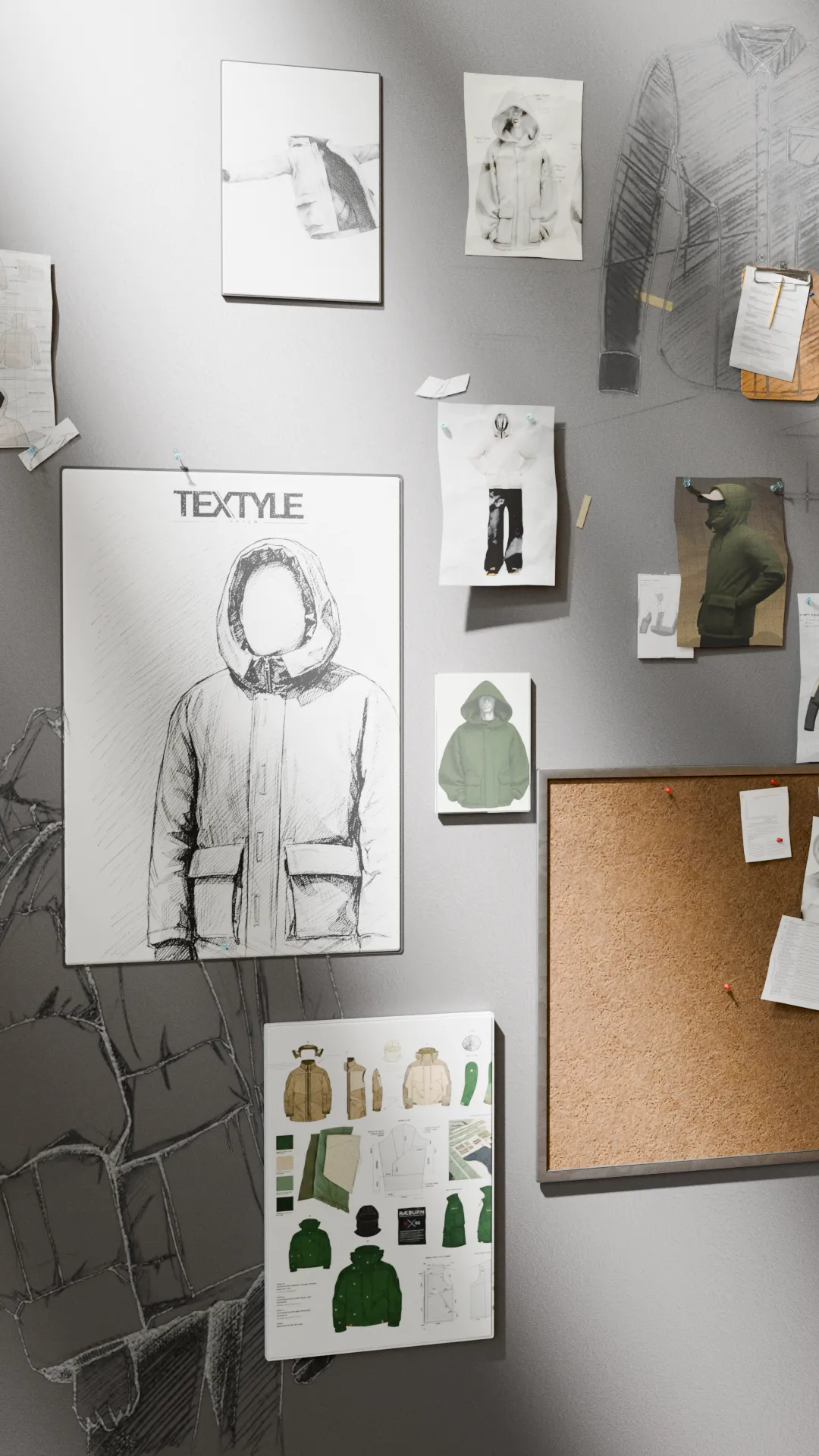
TEXTYLE used 3D animation to showcase the manufacturing process behind its technical outerwear, from fabric cutting to final garment assembly. The 10-shot animation reveals the production details and highlights the company's technical capabilities.
Why this approach works: 3D storytelling makes complex manufacturing processes easier to understand and helps brands communicate the technology and expertise behind their products.
It connects product characteristics with emotions and experiences that audiences can recognize. It helps the brand sell not only the equipment, but also the feeling and identity associated with using it.
5. CGI and VFX advertising: when the goal is to stop the scroll
Business problem: The brand needs to attract attention, create shareable content and generate interest around a product launch.
CGI and VFX allow brands to create scenes that would be difficult, expensive or impossible to film in reality. The product can interact with oversized objects, unusual environments or exaggerated physical effects.
One popular format is FOOH (Fake Out-of-Home), where CGI is composited into real-world footage to create the illusion of a physical outdoor installation.
Why this approach works: it gives audiences something unexpected to watch and share. It can generate organic attention around a launch without relying entirely on traditional product advertising.
One important distinction: FOOH is a particular advertising format, while CGI and VFX are production techniques used to create it. Not every CGI campaign needs to be FOOH.
6. 3D anamorphic LED content: when the brand needs to dominate the physical environment
Business problem: The brand wants to create a memorable physical-world experience and attract attention at sporting events, shopping centres or high-traffic locations.
3D anamorphic content is designed for specially positioned LED screens. Through carefully controlled perspective, objects appear to extend beyond the physical boundaries of the display. Imagine a giant tennis racket appearing to break out of a screen, or a running shoe flying towards the audience.
The main objectives are increasing brand visibility, creating a memorable product launch, generating social media content and making sponsorship activations more noticeable.
Why this approach works: it combines physical location with a visual illusion that people are likely to notice, photograph and share.
A useful distinction here: anamorphic LED content is a distribution format as much as a 3D technique. It needs to be designed around the actual screen dimensions and viewing position.
7. WEB-Interactive 3D product visualization: when customers need to explore before buying
Business problem: Customers need more information or control before making a purchasing decision.
Sometimes watching an animation isn't enough. Customers want to explore the product themselves. Interactive 3D visualization allows them to rotate, zoom, customize and examine a product from different angles. Implementing 3D web integration services brings lightweight image sequences and real-time WebGL models directly into your eCommerce site, giving buyers the freedom to inspect equipment on their own terms.
For sports equipment brands, this can be useful for choosing between different product configurations, exploring materials and components, comparing product variations, understanding technical features and creating a more engaging online shopping experience.
Why this approach works: it gives customers an active role in exploring the product, rather than making them passive viewers of advertising content.
How to choose the right 3D approach for your sports brand
As we've seen, there are many ways to use 3D in sports equipment marketing. But choosing the most visually impressive technique doesn't necessarily mean choosing the most effective one. The decision should come from the product, the audience and the marketing objective.
| If the brand needs to... | Consider using... |
|---|---|
| Present a new collection | 3D static renders |
| Launch a new product | 3D product animation |
| Explain internal technology | Exploded-view animation |
| Communicate performance and product benefits | 3D brand storytelling |
| Create attention-grabbing social content | CGI / VFX / FOOH |
| Make an impact at a sporting event | 3D anamorphic LED |
| Help customers explore product features | Interactive 3D |
| Connect product technology with real performance | Hybrid 3D and live-action |
For example, a new swimming goggle collection might benefit from photorealistic 3D product renders and short product animations. A new padel racket with innovative carbon construction might need exploded-view animation to communicate its technology. And a well-established sports brand launching a new flagship product might benefit from a cinematic CGI campaign that builds a distinctive visual identity around the product.
There is no universal solution. The same product can benefit from several different approaches, depending on the message the brand wants to communicate.
Conclusion: 3D is not just about making sports products look good
The sports industry is competitive, and product innovation is happening constantly. New materials, construction methods and technologies give brands opportunities to differentiate themselves. But having an innovative product isn't always enough. Customers also need to understand why it is different and what makes it worth choosing.
This is where 3D product visualization becomes more than a creative tool. It can help brands present products before they are physically available, explain complex engineering, demonstrate performance features, create memorable campaigns and improve the online shopping experience.
The important part is not choosing the most complicated 3D technique. It's understanding what the product needs to communicate and finding the visual approach that communicates it best.
See Technical Storytelling in Action: TEXTYLE Group
Explore how we visualized complex textile engineering, precision laser cutting, and membrane layering across a 10-shot high-performance 3D sequence.
Explore TEXTYLE Case Study →Frequently Asked Questions
Why should sports equipment brands use 3D visualization instead of traditional photography?
Traditional photography can only show the exterior of sports gear. 3D visualization allows brands to reveal internal engineering, such as shock-absorbing shoe cores, aerodynamic carbon weaves, and multilayer membranes, in high-fidelity motion before products are even manufactured.
What sports products benefit most from exploded-view 3D animation?
Products with layered technical components (such as running shoes, padel and tennis rackets, cycling helmets, golf clubs, and technical apparel) benefit most, as exploded views clearly showcase how separate materials and mechanisms contribute to athletic performance.
Can 3D assets created for product launches be repurposed across eCommerce and social media?
Yes. A single 3D project can yield high-resolution website hero videos, 9:16 vertical reels for social ads, 360-degree interactive viewer models, and photorealistic catalog stills across all colorways without scheduling additional shoots.
What is the difference between CGI / VFX advertising and standard product animation?
Standard product animation focuses on realistic feature demonstration and mechanical explanation. CGI and VFX advertising often blends products into fantastical environments, exaggerated physical simulations, or real-world footage (such as FOOH) designed to capture attention and drive social virality.
Start Your Project
Ready to apply these storytelling techniques to your brand? Let's discuss how we can create stunning 3D visuals together.
Book a Discovery Call